My age: 16
Hourly wage: $10 per hour, cash in theory
If you grew up in Chicagoland there was no Macy’s, there was no Nordstrom. There was Marshall Fields.
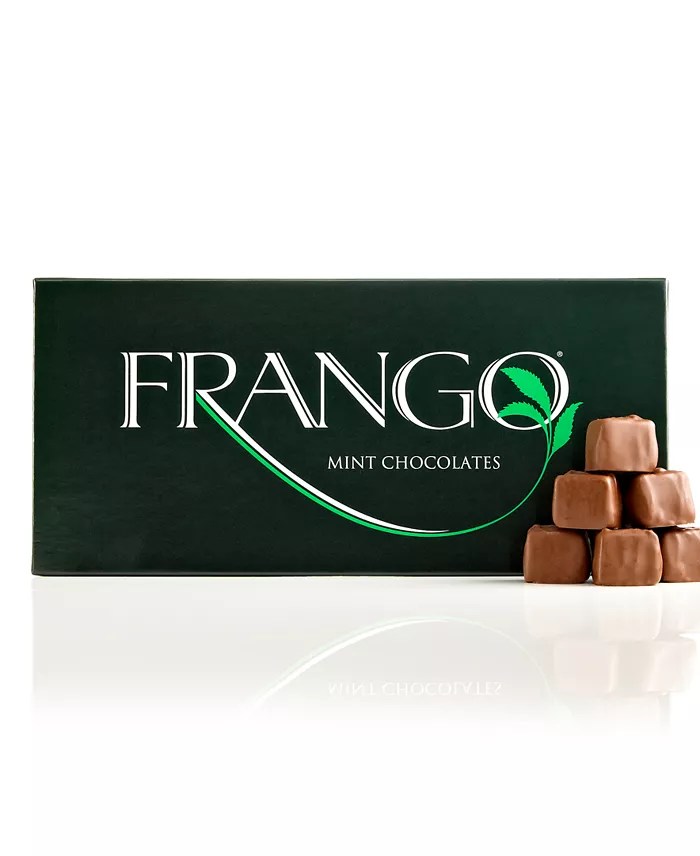
Marshall Fields was the department store that had everything. Clothes, furniture, a café, and most importantly, Frango mints. If you don’t know what a Frango mint is, I am sorry for your loss. They were a small, perfectly square chocolate mint that came in a signature green box and were a staple in our house every Christmas. My mouth still waters thinking about them. Marshall Fields didn’t just sell things. It sold a certain version of Chicago that felt like a better version of everything.
My dad Stan worked his entire career at Sears. Sears was not Marshall Fields. We had a Sears discount card and my mom would make me go there first, but I would always beg and cajole her to take me to Marshall Fields instead. There was just something about the place.
So when the opportunity came up to work there as temporary holiday help, I signed up. I don’t even remember why. I think I just liked the idea of being associated with the place.
I should have asked more questions.
Retail stores staff up heavily between Thanksgiving and Christmas to handle the volume. What could Marshall Fields not keep up with during the holiday season in the early 1990s? Sweaters. Specifically, sweaters being folded and looking nice on tables for customers to destroy approximately four minutes after they were arranged.
I didn’t know that part yet.
What I did know was that I had to show up in a sport coat, dress pants, and dress shoes. I was 16. I owned one sport coat and it was at least two sizes too small. I put it on anyway and drove to the Oak Brook Mall, maybe the greatest outdoor mall in the history of outdoor malls, with fountains and ponds that our family had spent half our childhood visiting. I had been coming here my whole life to watch movies, eat out, and shop. Now I was arriving as an employee.
Finding a parking spot on a random Tuesday night in December at Oak Brook was its own separate job. I drove up and down rows hunting for white reverse lights, when you saw those white lights you knew someone was leaving. Eventually I found a spot, got out, and headed inside.
It took me a while to find the right office. Once I did, they pointed me toward Women’s Clothing.
I was already hot.
Marshall Fields had lights designed to make their merchandise look beautiful and their temporary employees feel like they were slowly being cooked. I found my supervisor, who walked me over to the largest table of sweaters I had ever seen in my life. It looked like someone had already destroyed it on purpose. Sweaters everywhere. A catastrophe of knitwear.
My supervisor produced a small folding board, demonstrated the correct technique, and explained that I needed to fold every sweater on that table and organize them by size — small, medium, large, extra large — and that they needed to look perfect.
Then she left.
I went to work. It took a while to find my rhythm but eventually I got there, fold, smooth, stack, size order. Occasionally a customer would stop and ask me about a color or a size and I would do my best impression of someone who worked in Women’s Clothing. Slowly, the table started to look good. Really good actually. After about an hour I stepped back and looked at what I had built. Neat rows. Perfect stacks. Sizes in order. It was genuinely satisfying.
I was about to go find my supervisor and ask for my next assignment.
And then she arrived.
I don’t remember her face. What I remember is that she was completely uninterested in my perfect rows of sweaters. She was interested in finding her size. She started pulling sweaters out, unfolding them, holding them up, putting them back in the wrong place. I watched an hour of work come apart in about ninety seconds.
Before I could even process what had happened, two more customers arrived at the table and began doing the same thing.

I stood there in my too-small sport coat, sweating under the lights, folding sweaters as fast as customers could unfold them, and I had a very clear thought:
This is the job. Forever. This is what this is.
Hot. Repetitive. Infinite.
I don’t know exactly when the decision happened. There was no dramatic moment, no conversation with my supervisor, no two weeks notice. At some point I just put down the folding board, walked through Women’s Clothing, through the store, out the door, across the parking lot, and got in my car.
I drove home.
It was the right call and I knew it immediately. Some jobs tell you everything you need to know in the first hour. This one told me I was not built for repetitive work, that knowing that about yourself early is genuinely valuable, and that sometimes the right move is to hit the eject button without overthinking it.
Years later I took a job at a tech company where I was assured the product worked and things were going well. Three weeks in I knew that was not true. I thought about Marshall Fields and 9 months later I bailed, maybe it wasn’t fast enough. It was the right call then too.
The eject button exists for a reason. Using it isn’t failure. Staying when you already know is.
Days later I realized I had never collected my $20. I did not go back for it. But I have never once regretted leaving. Marshall Fields gave me something more valuable than $20 that day — the self-knowledge that I am not built for repetitive work. That lesson has been worth far more than a green box of Frango mints.
Although those mints were really, really good.
No job was wasted. Even the one that lasted a few hours.


Leave a Reply